

Charis-Vey does not rule the ‘Neath, he curates it. Where others see a criminal underworld, he sees an exhibition: a fragile, breathing arrangement of debt, ventilation, light, and blood that requires constant adjustment to keep from collapsing. He moves through the lower wards with the quiet grace of a master weaver, his eight arms never still, never wasted, each trained to a precision that borders on the uncanny.
Charis-Vey is a Bonebreaker, but not by accident or spiritual collapse. He chose severance.
Born to a high-weaving lineage in Ankh, he was expected to channel ancestral echoes, to let the many-dead speak through his hands as he spun thread. But the voices were suffocating. They demanded continuity, deference, and submission to patterns older than the port itself. Charis-Vey wanted control, not communion. In his late youth, he underwent a forbidden severance rite: a ritualistic unweaving of his ancestral threads, performed with silk, salt, and his own venom. It broke his Inheritance. It silenced the dead. It left him spiritually hollow, but it also left him free.
He gained silence. He gained focus. He gained the ability to look at a broken system and see exactly where to pull without the weight of tradition whispering otherwise. Ankhala traditionalists consider him cursed. The ’Neath considers him necessary. He does not apologize for the silence. He enjoys it.
When The Claim abandoned the mines, Charis-Vey was already in the upper wards, working as a ledger-keeper and silk-merchant’s apprentice. He saw the vacuum before anyone else did. While others panicked or fled, he mapped the ventilation grids, catalogued the stockpiles, and traced the fault lines of the Baldachin’s cooling matrix. He realized early that solidarity would not purify water, and oaths would not stop pumps from seizing. Trade would. Leverage would. Debt would.
He organized the first ward-councils not through charisma, but through arithmetic. He traded refined Cheladrite for grain, scavenged silk for filtration moss, and ventilation access for silence. He brokered the first unspoken truce between the surface authorities and the lower wards by ensuring the Harbormaster’s office never ran out of coin, constables never went unpaid, and the Baldachin never fully collapsed. He did not build the ’Neath. He curated its survival. Over decades, he transitioned from merchant to architect, from architect to unseen hand, and from unseen hand to The Curator.
Charis-Vey does not pull strings. He adjusts tension. His control is theatrical, elegant, and deeply systemic. He views the ’Neath as a living exhibition, and he is its sole curator. He stages events, arranges balances, and orchestrates the quiet performances that keep the city from eating itself. When a ward grows too heavy with debt, he shifts ventilation to encourage migration. When a ledger-house becomes too ambitious, he redirects a coolant line to force a shutdown. When violence threatens the truce, he does not send enforcers. He adjusts the Baldachin’s cycle, triggers a Lull, and lets the dark do the curating for him.
His methods are never loud. They are precise. He speaks in favors, not threats. He trades in silence, not spectacle. He knows which constables drink too much, which dock-captains owe their lives to his silk, which refinery hands will look away for a single ledger-chit. He does not rule through fear. He rules through necessity. And in a city built on stolen momentum, necessity is the only law that holds.
Those who meet him describe an almost hypnotic presence. He listens with all eight arms resting in calm symmetry, his silver hair catching the dim light of the false sun. He smiles rarely, but when he does, it is the smile of a man who has already decided the outcome. He does not raise his voice. He does not need to. He has curated the room long before he entered it.
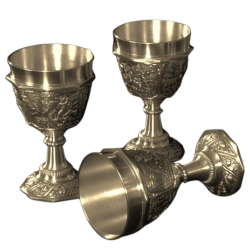
Zompomp does not intoxicate Charis-Vey anymore, but it does still sharpen him. The refined draft stimulates Ankhala venom production, and Charis-Vey uses it sparingly, deliberately, to maintain the potency of his saliva. His venom is not meant for combat. It is meant for negotiation. A single drop, introduced through a micro-cut or a shared cup, induces temporary paralysis, heightened truth-telling, or forced compliance. He does not torture with it. He curates with it. He uses it to break deadlocks, to force confessions, to ensure that when he asks a question, the answer is not shaped by pride or fear.
He no longer partakes in Zompomp for the high of it–he drinks it for the edge. And in a city where the dark is always watching, the edge is all that keeps the curator’s hands steady.
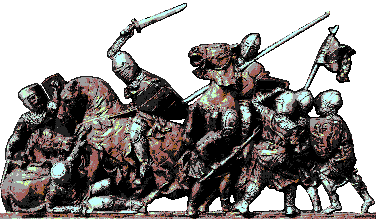
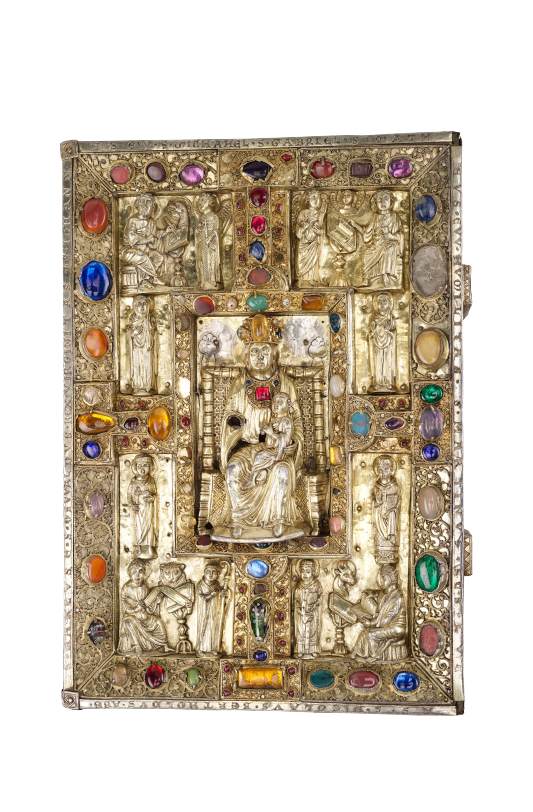
The Curator’s presence is woven into the ’Neath’s architecture. Murals depict him with eight arms holding the pillars of the truce. Ledger-covers bear his sigil: an eight-pointed spool wrapped in conductive silk. Children in the lower wards leave small offerings of polished glass at ventilation grates, not out of worship, but out of habit. The city breathes because he chose to hold it, and the ’Neath does not forget its architects.
Neither monster nor saint, Charis-Vey is a man who severed his past to preserve a future, who trades in silence to keep the dark from swallowing the light, and who carries the weight of a city that will never thank him. He knows this. He does not expect gratitude. He expects continuity.
And as long as the Baldachin hums, as long as the ledgers balance, as long as the Lull comes and goes, Charis-Vey will be there. Adjusting the tension. Curating the chaos. Holding the loom.
He is older than he appears, though his silver hair has been his since youth, falling in heavy, silken waves past his shoulders. His skin carries the cool, slate-blue tones of his ancestral sinkhole, and his eyes—large, reflective, and pale as ground quartz—hold the weight of centuries spent watching chaos and deciding what to preserve. He is undeniably attractive, not in the sharp, predatory way of port captains, but in the manner of old silk and polished stone: deliberate, composed, and deeply seductive to those who understand that power, properly framed, is an art.
Charis-Vey was born with what some Ankhala traditions call prosperous limbs: eight arms, symmetrical and heavily jointed, a rare expression of ancestral pressure made visible. In the sinkhole city of Ankh, heavy blood is usually read as spiritual burden, a sign that the many-dead are watching too closely through the living flesh. But in the ’Neath, Charis-Vey reclaimed the symbolism. He commissioned murals, ledger-covers, and silk banners depicting himself with all eight arms extended, each holding a different pillar of survival: a coin, a ventilation valve, a scale, a key, a spool of conductive silk, a ledger-chit, a Baldachin tuning fork, and a single drop of venom. The message is deliberate: I carry what eight generations could not. His limbs are not a curse. They are proof that he bears the weight of the truce, and that the city breathes because he chooses to hold it.
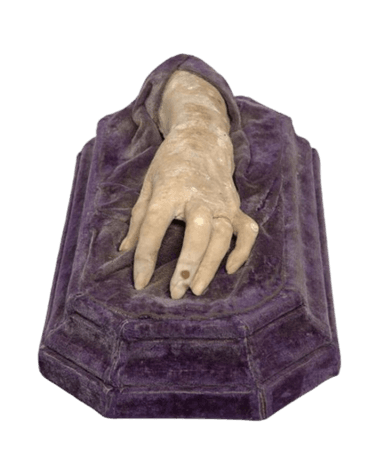
Through decades of intensive training, he forced his arms into perfect dexterity. Ankhala with prosperous limbs rarely master all of them equally; most favor two or three, letting the others rest in secondary tasks. Charis-Vey did not. He practiced knot-tying, ledger-flipping, valve-turning, blade-drawing, and silk-weaving until every joint responded with the same fluid precision. The result is a physical language of control: he can sign a debt-transfer, adjust a coolant line, and draw a dagger without breaking eye contact. Outsiders find it mesmerizing. Insiders find it terrifying.