Lyss-of-the-Still-Basin serves as the public face of Mor’s Port’s authority, a position she holds with practiced grace and quiet desperation.
As Harbormaster’s Adjunct, Lyss manages the port’s daily operations: tariff collection, docking permits, constabulary oversight, and the delicate dance of pretending the ‘Neath does not exist. She believes in the system, or at least in the necessity of it. To her, chaos kills much faster than corruption. A collapsed tunnel, a flooded ward, a spike in toxic hair–these are not abstract failures. They are bodies in the Sump, names on ledgers, ghosts in the Baldachin’s fading light.
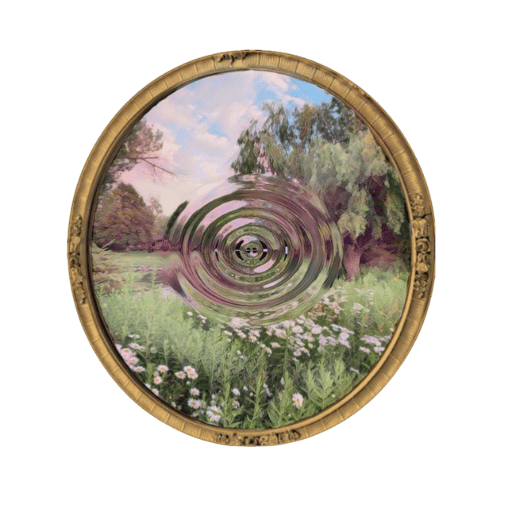
Her magick is an extension of this maintenance. Uruum, or Cymathurgy, arises from resonance, not force. It generates standing waves that organize matter into temporary mandalic pressure forms. Lyss has specialized this practice into literal, shimmering spheres. In the high-humidity environment of Mor’s Port, her keluun shapes acoustic dampeners and shock-seals that manifest as bubble-like orbs of condensed pressure. She uses them to reinforce failing piers, stabilize ventilation shafts, and dampen toxicity spikes before they breach the surface. It is beautiful, practical work. But it is completely unsustainable. Lyss is a workaholic who pushes her keluun past safe limits, compensating for deferred infrastructure with personal resonance. Her exhaustion is physical, a chronic inflammation of the throat-chamber and a constant, low hum of feedback that never quite settles.
The toll is compounded by personal loss. In Uruuli culture, kinship is governed by Pool custom and resonance compatibility. Within the Still-Basin, a “sister” is not merely a biological relative but a shared pattern of resonance, a living echo that harmonizes with one’s own frequency. When Kharra-tusk accidentally killed her sister during the Lull, Lyss did not just lose family. She experienced a metaphysical amputation. The pattern was halted, never to play out to its completion. It left a dissonant gap in her own resonance that no ledger can fill, and no amount of collapses prevented can give closure to. She buried the grief under bureaucracy, channeling the void into the relentless upkeep of the port.
She used the tragedy of the collapse to bind Kharra-tusk, the young Teshkar who arrived seeking kin, into a quest of penance: retrieve stolen ledgers, clear smuggling routes, deliver sealed packages, silence witnesses. Lyss does not hate Kharra-tusk, she needs her. Every task crossed off the to-do list pulls the Teshkar girl deeper into the machine, and Lyss tells herself this is mercy. Better to be bound by debt than dead in the dark. The port breathes. The Baldachin hums underfoot. The ledgers balance. And Lyss stands in the center of it all, speaking a language that cuts against her grain, shaping bubbles to hold back the dark, waiting for the next Lull to test how much more of herself she can give before the pattern is unmoored forevermore.
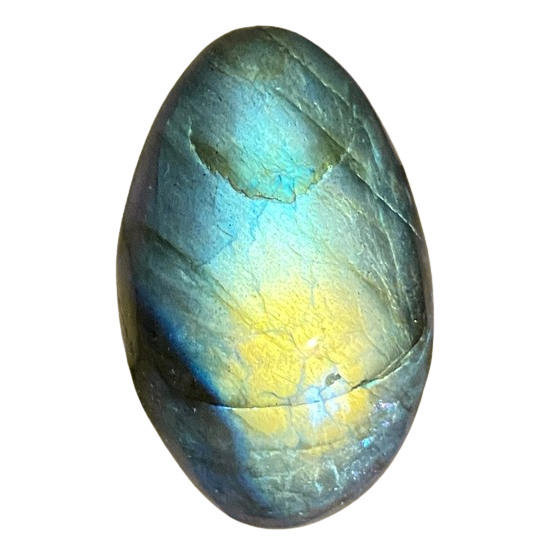
An Uruuli from a high-tide Pool, her skin carries the pale blue, dappled tones of shallow tidal waves, and her eyes flash like bright spinel stones socketed into her skull. She moves with the fluid grace of her people, but there is a tension in her posture–a stiffness in her shoulders and a deliberate stillness of the fin-fringes that signifies the weight she carries.
To Mor’s Port, she is the Lady of the Tides. To the Uruuli, the title is a fiction. Uruuli possess no concept of gender or sex; identity is understood as a pattern of resonance shaped by Basin, inheritance, and lived history. Uruuli do not use -of-the-Basin naming. It is Manstongue bureaucratic padding, forced onto Uruuli phonetics because Manstongue demands location and gender markers where Uruuli recognize none. Lyss allows the she/her pronouns and the “Lady” title not as an identity, but as a bureaucratic lubricant.
Manstongue is a ghost-language built on hierarchical categories, and Lyss has learned that a gendered, familiar authority is easier for outsiders to swallow than the reality of her resonance. She wears the mask so her mercy-through-debt remains palatable to those she must control. Every time she forces her keluun to shape Uruuli resonance into the stilted phonemes of “she” or “adjunct,” she experiences a low-grade metaphysical friction. It is not rot, not Kegri, but the slow and exhausting strain of speaking a tongue that denies the authority of her own living pattern. Her quiet desperation stems from decades of overclocking herself to keep a human-built port breathing in a language it was never designed to hold.