Her parents were sold to The Claim in the desperate decades following the Cataclysm, traded for transit papers and a promise of steady labor that never materialized. They stayed because there was simply nowhere else for them to go. The air in the lower drifts was thick with unrefined dust, unfiltered runoff, and the sweet, cloying rot of stagnation. Her mother knew she was carrying a clutch, but The Claim offered no accommodations, no reduced shifts, and no maternity leave. Stopping work meant starving. So, she kept working.
The accident was a structural failure born of deferred maintenance and corporate negligence. A primary cistern, corroded beyond safe tolerance, ruptured during her shift. She was caught in the structural collapse and pinned underneath part of a collapsed supportive structure, trapped underneath a flood of raw Zomp slurry and chemical runoff. The toxicity seeped into her blood, flooded her lungs, and stained the clutch of eggs she was carrying a sickly green. By the time she was pulled from the drifts, she believed every egg had been smashed, dissolved, or poisoned into stillness.
She was wrong.
Weeks later, weakened but alive, Ellvra’s mother awoke to find she had laid a single, vivid green egg in her sleep. Terrified it was stillborn or corrupted, she wrapped it in scavenged insulation and kept it pressed to her chest, worrying over it through sleepless nights. Her scale-mate stayed beside her, dutifully sharing rations, tending the ventilation drafts, and holding the fragile hope that life could still pull through.
When it finally cracked, it parted like a flower opening to poor light. The shell was soft and damp, more befitting a serpent than dragon-kin. Inside was a hatchling coated in the chemical patina of the disaster: scales layered in glassy green hues; eyes the sharp chartreuse of the ‘Neath’s sun; little claws and teeth the pale green of river-tumbled glass. She named her Ellvra. The only one who survived, who her mother got to keep.
They loved her unconditionally. There was no hesitation, no superstition, no lingering grief for the clutch they lost. The ‘Neath was a hard place, but her parents made sure she knew she belonged. They patched her breathing filters with scavenged silk, taught her how to read the hum of failing ducts, and shielded her from the worst of the dockyard’s cruelty. But the city didn’t forget what she carried in her blood, and the toxicity never left her system. It settled into her scales, her lungs, her heart. It painted her green, hitched her Breath, and marked her as something the port didn’t know how to categorize.
Drakein modeled on Arestat are bred to understand tension, balance, and controlled fracture. Most struggle to hold the duality. Ellvra clings to order because chaos nearly unmade her before she drew her first breath. She memorizes ventilation schedules, load-bearing ratios, and airflow mathematics because they are the only things that keep suffocation at bay. She fears the unpredictable, the unmeasured, the collapse.
But her Breath doesn’t build, it clears.
When she exhales, the air around her shimmers with a sharp, crystalline distortion, like heat rising off the streets of Gamora. Her Breath manifests as concentric stress-waves that seek out calcification, stagnation, and structural decay. It splits mineralized Kegri from bone, cracks rusted support beams before they buckle, and shears through the resinous sludge that chokes the Sump’s drainage arteries. It is chaos used to restore flow. The visual effect is subtle but violent: a sudden spiderweb of cracks across a contaminated surface, followed by a dry, percussive pop as the waste fractures away. It leaves the air tasting of ozone, crushed flit, and rain. Where Lyss’s Uruum creates soft, spherical buffers to contain and dampen, Ellvra’s Breath introduces disruption to disorderly order. It unmakes the rot so flow can resume.
She did not force herself into the Basin or appropriate Uruum. She learned it in the Sump’s edge-tunnels, sitting with Uruuli friends whose gills were already thick with rot, sharing filtered water and pickled duckweed as they traded stories of Pools that no longer existed. She learned it not as a weapon, but as a conversation: a way to ask the water where it wanted to go, and to respond by clearing a path. Her voice, permanently compromised by decades of toxic exposure and the strain of shaping a language not built for Drakein physiology, carries a dual-register rasp. It’s not melodic, but it’s precise. When she speaks the Basin’s language, the water listens.
Her crew are flightless Valravn held together by sutures and Uruuli janitors with advanced Kegri-rot. They don’t follow her out of devotion, they follow her because she knows how to stop the decay. She clears the pipes, stabilizes the shafts, and teaches them how to scrape without bleeding out. They are not zealots, but survivors who have found a saint that asks for no worship, only more wounds to heal.
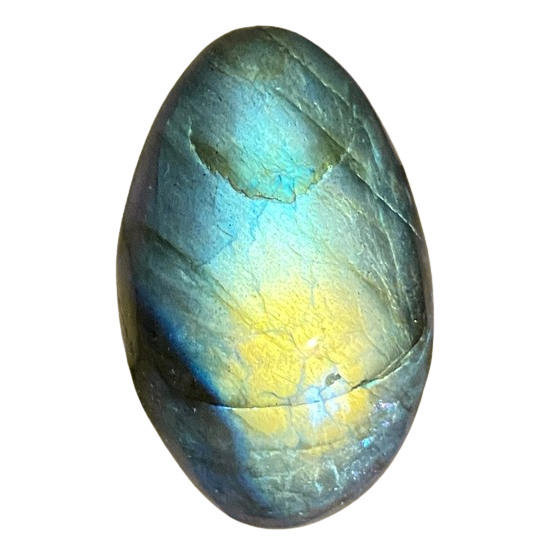
Ellvra does not resemble the uniformed Forged who once paced the containment halls of the Severance era, nor does she fit the aesthetic expectations of a hatched Drakein. Her scales are a mosaic of celadon, jade, and malachite, layered like mineral-rich sediment caught in slow-moving water. Where her jaw was once shattered, thin gold sutures bind the fracture, giving the impression of a geode split open to reveal a vein of precious metal. Her hair reads as black until it catches the failing light of the Baldachin, where it bleeds into a green so dark it borders on midnight moss. Her eyes are chartreuse, slit-pupiled and unblinking. Her teeth, claws, and bone structure share a pale celadon hue.
The gold wire tracing her jawline is not ceremonial. Two years ago, during a raid on a contested sump-refinery, a Curator enforcer’s hammer struck her head at full force. The impact shattered her mandible, fractured three vertebrae, and left her drowning in her own blood on a rusted grating. She would have died there if not for a flightless Valravn whose feathers had long been faded to grey by Kegri-rot and refinery sludge. He did not have the tools for Gamoran bone-surgery.
He had only gold spool-wire, a heated awl, and hands that had spent decades stitching his own torn flesh back together in the dark. Working by the dim flow of a resin-lamp, he wired her jaw shut, anchor by anchor, pulling the fractured plates together while she bit down on a strip of cured leather to keep from screaming. The sutures were crude, but they held. Over months, her Drakein physiology knit around the metal, fusing it to her bone and nerves. The result is a permanent, clicking ache and a voice that frays into a rasp, but it also gave her something else: a permanent conduit for her magick. The gold conducts the shock of her own breath, grounding the chaotic frequencies that would otherwise rend her vocal chords asunder with time. She does not hide the wire.
She is scarred, asymmetrical in a way that unsettles the unaccustomed eye, and undeniably beautiful. Mor’s Port has no vocabulary for that beauty. To the port’s rigid sensibilities, she is a defect, a warning, a thing that should have been filtered out along with the rest of the impure zomp.
The ‘Neath and Mor’s Port rarely agree on anything, but they share a single conviction: Ellvra must be stopped. To the surface authorities, she is a domestic terrorist who destabilizes trade routes, collapses smuggler warehouses, and sabotages the very infrastructure that keeps the port’s economy afloat. Her magick clears the calcified runoff the Ward relies on for filtration, cracks load-bearing supports the Curator uses to partition contested districts, and opens sealed emergency hatches that bypass toll-gates and ward-locks.
To the ledger-houses, she is a radical whose work unmakes the quiet compromises that keep the truce breathing. Both sides have issued bounties, deployed strike-teams, and sent enforcers into the maintenance warrens with explicit orders to kill. She has survived three direct attempts on her life in the last year alone: a rigged maintenance tunnel collapse that nearly crushed her crew, a poisoned cistern that sickened half her Uruuli, and a sniper’s arrow that grazed her shoulder during a blackout. The price is high enough that rival gangs turn informant, feeding her coordinates to ward-captains and Curator enforcers alike. She cannot safely move in the light. She works only during the Lull or in the narrow windows between Baldachin cycles, when the city’s attention fractures and the dark offers temporary cover.
When the bodies began appearing during the Lull, the constabulary needed a face to match the horror. They found one in Ellvra. The official bulletins cite the surgical precision of the incisions, the ventilation-grid access points used to bypass ward-locks, and the deliberate placement of bodies near drainage junctions–all hallmarks of her crew’s tactical blueprints. Her history of structural sabotage, her refusal to operate within the ledger’s economy, and her open contempt for the Curator’s control only tighten the narrative. To the surface press, she is the Lull-Cutter. To the constabulary, she is a destabilizing force finally caught in the act. But the ‘Neath does not trade in certainties.
Skeptics point out that the murders require access to ledger-chits, refined Elixir, and surface-dock clearance–commodities Ellvra’s crew has neither access to nor interest in. Others argue the precision is too clean, too theatrical, lacking the brutal pragmatism that defines her past operations. Some whisper she’s being framed by those who would benefit from her removal: ward-captains seeking to consolidate routes, Curator enforcers looking to break the Ventmaster’s influence, or surface magistrates desperate to justify cracking down on the truce. Ellvra has neither claimed responsibility nor issued a denial. She knows the truth is a luxury she cannot afford. So, she keeps it moving. Keeps clearing, keeps the air filtering through a city that would rather choke than admit it is rotting.