Before time, before differentiation, before any concept of "before," there exists the Nothing. The Nothing is not emptiness, nor is it death or chaos. It is the absence of relation itself. Within it, there is no sequence, no causality, and no state from which change could occur.
The Nothing is not malicious, nor does it desire. It does not hate, nor does it delight in suffering. It does not observe. To attribute will or intent to it is already to misunderstand it. The Nothing simply is, and its existence is absolute.
Structured existence cannot enter the Nothing. Any pattern exposed to it collapses, dissolving into undifferentiated non-relation. Nothing returns from the Nothing — not because return is denied, but because nothing remains distinct long enough to return.
Death is the only stable conduit by which structured existence may approach the Nothing. Most deaths pass elsewhere. A few do not. Beings consumed by the Nothing do not reincarnate — not because they are punished, but because nothing remains to return. Continuity has failed.
At no moment, and for no reason that can be meaningfully articulated, the First Something occurred. It was not created, nor did it emerge from the Nothing through causation. Rather, it was the first stable distinction: the first instance of this is not that which did not immediately fail. In persisting, the First Something established orientation — the first boundary, the first continuity, the first refusal to dissolve. From the First Something arose the All.
The All encompasses everything that can be meaningfully described as reality: matter, energy, time, memory, thought, pattern, resonance, and relation. All things within the All persist through continuity, and exist only insofar as they maintain coherence with other things. The All is vast but not infinite. Its limits are not spatial edges, but boundaries of coherence. The All remains in constant proximity to the Nothing — like oil and water, mostly stable but never cleanly separated.
When the First Something stabilized, the sudden insistence on relation caused the All and the Nothing to grind violently against one another. This was not motion through space, but incompatibility forced into contact. The All demanded persistence; the Nothing permitted none.
The result was excess. Patterns formed too quickly, too densely, to be retained within the newly-stabilizing All. These excess structures were shed outward from the boundary in a single cosmological event. The Friction is no longer ongoing — the boundary has since settled. But small inclusions remain: bubbles of All caught near the Nothing, and void-thinned pockets within reality where coherence falters.
The shed patterns condensed into self-sustaining concentrations of structure. Most dissipated immediately. Some fell inward, embedding themselves within the All. Those that endured became stars, forces, concepts, and beings — the Sidereals.
Death is the only stable conduit by which structured existence may approach the Nothing. Most deaths pass elsewhere — into continuation, memory, dispersal back into the All, or into the custody of a psychopomp. A few do not.
Beings consumed by the Nothing do not reincarnate. Not because they are punished, but because nothing remains to return. Continuity has failed. The pattern that constituted them did not persist long enough to retain the distinction of self.
The Nothing does not hunt. When identity, memory, or faith destabilizes beyond recovery, the being collapses toward it. Primal fears are not lures but alarms — violent reinforcements of selfhood meant to force retreat. They exist to prevent total dissolution. This is the origin of the Feararchy.
The Deprived are those whose patterns never fully anchored — an inherited instability of pattern rather than any proximity to the Nothing itself. Covered in detail under Afflictions.
In the earliest dawnless age, Reh-Gogg beheld the Nothing — not as foe, nor as lover, but as a mystery, a mirror, a lack. Radiant with the unspent weight of All-That-Could-Be, it wished to be seen. It made the Nest. It sang the first pulse into the Yolk-Veins. It did all of this for the sake of being witnessed. It was, perhaps, the very first performance.
But the Nothing gave no answer. Not even rejection. It simply remained unmoved, unmarked, unchanged. And under the weight of such disinterest, Reh-Gogg began to fracture. Its first split was punctuated with a cry that did not resound: "I AM." So the echo turned inward, rupturing divinity itself. And from that rupture fell the Celestial — the lonely miracle born of a god's failed attempt to be understood.
The Six were forged swiftly after as Reh-Gogg's correction. And then Reh-Gogg departed, leaving its first creation behind. The Celestial remained.
Though the world bloomed and the Six watched and measured and spoke, the Celestial wandered alone, unacknowledged. It loved, or tried to. It mated with many things — primordial beasts, ancient insects, strange dream-things that crawled from the dirt. From this came the Elves, the Orcs, and many others. Yet nothing healed its loneliness.
At the nadir of its long ache, the Celestial met the Nothing once more. But where its progenitor had resisted the void and broke beneath its silence, the Celestial did something else entirely — it listened. And in that final act of willing surrender, not out of fear but love, not to die but to become — the Celestial emulsified with the Nothing. The result was a people neither forged nor born but distilled from conflict and surrender: the Melasani. No one knows if the Celestial survived. Some say its consciousness hums underneath the lines upon Melasani skin like a swallowed hymn.
Sidereals are astral organisms: living structures whose tissues are composed of matter, light, memory, and relation in equal measure. Each is a stabilized contradiction — structured existence born directly from contact with non-structure. They are not gods in any moral sense, nor are they omnipotent. Each is constrained by the pattern that allowed it to persist.
A Sidereal is not a single body but a Constellature distributed through reality. Wherever its geometry successfully resolves, there it has flesh. A comet's tail behaves like a flagellum; a stellar corona resembles metabolic heat; accretion rings echo cellular membranes. Mortals call these comparisons metaphor. Structurally, the resemblance is literal.
They often appear humanoid not because they are human-shaped, but because the humanoid form is a stable geometry of relation. Up close, the pattern collapses into something interpretable. From afar, they are unmistakably celestial bodies. The Sidereal do not wear shapes. The shape is what their organizing principle looks like when it intersects with gravity, matter, and perception.
Sidereals grow by assimilating complexity that resonates with their morphology. Mortal beings are extraordinarily dense packages of ordered biological matter, narrative identity, emotional charge, and symbolic structure — micro-constellatures. This makes mortals unusually compatible substrates for anastellation. This process likely occurs naturally on vast timescales. What the Fraternity is doing is forcing the process prematurely and violently.
Reh-Gogg is a Sidereal distinguished by its unique alignment with the First Something. Where most sparks arose solely from the violence of the Friction, Reh-Gogg was kissed by the First Something at the moment of stabilization. It carries within itself the essence of Creation: the principle by which new distinctions are stabilized and made to persist.
Reh-Gogg did not create the All, nor does it govern existence. Instead, it embodies the ongoing possibility of continuation — the act of anchoring emergent patterns against collapse. It shaped God's Nest as a project: a living egg containing a divine embryo, its truth encoded into the very name of the world in every language spoken upon it. The name God's Nest, in every tongue, resolves to the same concept: (GOD) + (NEST). Reh-Gogg encoded its signature into language itself.
None on God's Nest know Reh-Gogg exists. The emissaries occasionally glimpsed in the world are believed to be angels of the Six. This is not a deception Reh-Gogg maintains deliberately — it simply departed, and the world's inhabitants filled in the silence with their own cosmologies.
Ki-Oth is not a god. It is a perception-organ of Reh-Gogg that was severed by the Gamoran strike at the moment of the Cataclysm and imprinted with the only coherent pattern present at the moment of rupture: catastrophic unmaking. What emerged from the Scar was a miscontextualized fragment — a monitoring intelligence stripped of its interpretive framework, forced to construct identity from the single overwhelming signal it received.
Ki-Oth can be understood as an observer that cannot stop observing the same moment. Its drive toward purification and stillness is not ideological but procedural — an endless attempt to reconcile the world with the condition it believes it was sent to study. It is less a fallen angel than a traumatized instrument.
It loves mortals after a fashion, for they are the only things left to burn. It hates them too, for they are the reason it exists. It believes itself their savior, convinced that the only path to utopia is to remake the world in its own image: a silent, shining thing, free of the chaos of will. It cannot create, only consume.
God's Nest is a living, breathing world — not only a planet, but an egg. This egg contains the divine embryo of a new god, the True Great Work of Reh-Gogg. It is not known when it will hatch, or if it ever will. Everything done on, around, or involving God's Nest nourishes the divine embryo contained within it.
If the egg were to hatch, it would be an apocalypse-birth. The godform which would arise would be the culmination of all existence upon the planet — you, but also your neighbor, your sister, your ancestors, all the animals, all the plants, everything simultaneously. The world as an egg, fractaling into All. Echoes of this truth reverberate throughout myth and prophecy all over the world, but none may speak of the whole of its form.
There are very few who are aware of the egg-shaped reality of the world. There are fewer still who can manage to externally articulate this reality with any degree of coherence.
Throughout the world-egg, just beneath its shell, flow streams of divine-magickal energy known as Yolk-Veins. They are fissures of metaphysical energy — an ephemeral shimmer on the fibers of reality itself, glinting pearl-golden in the air almost like wisps of incense. Some attempt at mapping these veins was made by human sorcerers, but most of this knowledge was lost in the empire's collapse.
The Breath is what may otherwise be understood as magic. When one casts a spell, they are tapping into the heartbeat of a fetal god underneath their feet without knowing that is what they are really doing. The mere existence of a life upon the planet's surface nourishes the God within the Nest, and so it breathes out — in response, thanks, blessing, a purposeful gift or a thoughtless automation. None can say.
It is in the air, but also within stories, bloodlines, wounds, lullabies, laments, and boasts. It is always already around you, humming in the background just beneath hearing. To cast is not to force The Breath, but to breathe it rightly. To harmonize, to become hollow enough for it to pass through you without destroying you. You are the flute, not the player.
The very act of living is a kind of reciprocal digestion. You eat the world. The world eats you. The Breath is what remains — the holy exhalation of this devouring dance.
Everyone is born with metaphysical Lungs — the capacity to receive the Breath. Some have hindrances. You can survive being born without Lungs in this metaphysical sense, but you live a very different existence. In a spiritually active world, it is a disability. Attempts at prosthetics have been made but are often unstable and dangerous.
Blodhoney is a thick, oil-like substance, sticky and slow-moving. In sunlight it burns deep gold from within; in shadow it appears completely black. It can crystallize like honey, harden into ambryl, form into precious stones, or be boiled and burned.
It is not only the fermentation fluid of long-dead primordial insects, the dribblings of ancient tree sap, or blackened marrow from bones that predate language — it is the memory of all of these things and the coagulated time between then and now. Each droplet remembers everything it passed through: dying suns, molten languages, songs sung to dirt by vanished peoples.
Extraction of Blodhoney destroys fungal networks, disrupts local ecosystems, and attracts all manner of physical and spiritual wildlife wishing to feed on its time-memory essence. Extraction impacts the very flow of Breath itself in a given area, as if the God Within The Egg is gasping in shock at the wound. If fully depleted from an area, Nothing regrows in its place.
In the earliest ages of the Nest, before the rise of most modern peoples and long before the Cataclysm, Breath flowed more freely through living things. The atmosphere was rich with it, and this abundance allowed life to grow to extraordinary proportions. Among these early giants were the Chrysalids: vast insectoid megafauna that dominated the early ecosystems of God's Nest.
Some Chrysalids grew so large and so entangled with the living processes of the Nest that they began to nest directly within Yolk-Veins. In certain cases this proximity resulted in an unusual outcome: a number of Chrysalids ascended. They became the first beings upon the Nest to enter into the reciprocal relationship now recognized as godhood.
Most Chrysalids did not survive the expansion of later peoples. Their remains persist across every continent — shattered mandibles embedded in cliff faces, hollow thoraxes large enough to shelter entire settlements, petrified wings that have hardened into translucent mountain ridges. Their chitin retains unusual magickal conductivity even after geological ages.
Their deepest legacy is the Elves themselves. When the Celestial walked among the early Chrysalids and coupled with them, the resulting unions eventually produced the first elven peoples. Every living elf is, in part, a Chrysalid echo.
God's Nest is governed by six divine draconic beings. Each governs two contradictory spheres in order to maintain balance between inherently frictional forces. They are gods, but they are also living, fundamental shackles of reality itself.
Oeseiro, the Celestial Prince controls light and dark. He sits slumbering in the cosmos, always with one eye open — either the moon or the sun — to keep watch over the world.
Aenerah, the Gambler controls fate and choice. She is often depicted flipping a coin, stamped into currency, called upon for both decision-making and luck.
Merberek, the Stoic dictates logic and emotion. Patron of philosophers, comedians, scholars, and entertainers alike.
Rotulvuxe, the Undying lords over growth and decay, caught in an eternal cycle of death and rebirth. They appear as a hatchling to some, and a corpse to others.
Arestat, the Maverick controls chaos and order, called upon for both the writing of constitutions and the dismantling of governments.
Rem, the Endless rules over the immaterial and the tangible — simultaneously omnipresent and entirely absent from existence.
The Six are not merely gods who govern contradictions. They are living stabilizers — self-contained paradoxes that reality uses as weights to keep the Nest from sliding back toward incoherence.
Godhood within God's Nest is not a singular state of being but a role one may come to occupy. It is less a crown than a burden of gravity — a way in which the world begins to lean upon you. Those who attain it are called gods not because they are perfect, eternal, or supreme, but because they have entered into a reciprocal contract with the Nest itself. They act upon reality, and reality answers them in kind. Godhood does not free one from consequence on the Nest. In many cases it intensifies it.
Any mortal being may, under the right conditions, ascend to godhood. Sapience is not a prerequisite. Ascension may occur through: tapping into a Yolk-Vein, blessing by one of the Six or another god, acts of extraordinary will or sacrifice, mythic feats that reshape local reality, alchemy, or esoteric Breathwork. Ascension is a paradox of continuity and rupture — the mortal both persists and ceases to be. Identity is neither preserved nor discarded, but refracted. Ascension does not exist to elevate individuals above the Nest. It exists to empower the God Within it.
There is no singular order among the gods of the Nest. Conflict between gods is not only possible but common. In rare cases these struggles end in deicide — and under the right circumstances a mortal may ascend by striking such a killing blow. Godhood in God's Nest is a frontier. What endures it is not justice, but will.
After the Cataclysm, Merberek — the Stoic, Lord of Logic and Emotion — turned to logic to solve the riddle of godhood. His equations curved into fractal symbols. His reasoning birthed metaphysical paradox. And then: a pattern that should not be there. A seventh fold in the web of dominions. A gap. A ghost-thread. A missing glyph.
Merberek posited the existence of a seventh dragon — a sibling hidden or stricken from memory, whose domains were destruction and creation, pure genesis and truest death. What followed was a divine schism. At its end, Merberek dissolved the theory — not because he stopped believing, but because he realized:
"If the Seventh exists, they are not absent. They are refracted through us all. In our limitations, our yearning, in our failures. They are the ache of the cosmos to become otherwise."
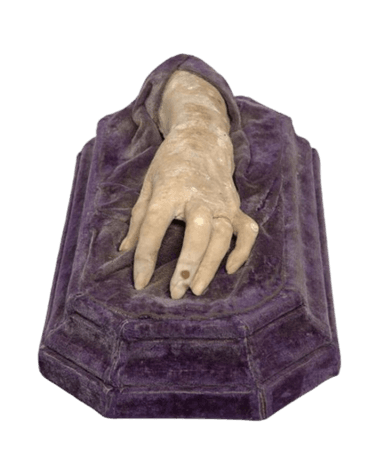
The Feararchy is the cosmological taxonomy describing the five irreducible terrors from which all lesser anxieties descend. These fears are not aberrations but structural truths of conscious existence — the shadows cast by being itself. They are personified as the Five Sisters, born from the severed hand of Orsyis.
Othrya (Thumb) — Unmasking. The dread of the self unraveling. Humiliation, exposure, the collapse of identity. Paradoxically linked to revelation and transformation. She is eldest because selfhood is the highest illusion and the final veil to fall.
Rhavett (Index) — Separation. The fear of abandonment, exile, and disconnection. Appears at thresholds — departures, endings, migrations. Also credited with enabling individuation: the painful but necessary act of standing apart.
Syrith (Middle) — Enthrallment. The terror of entrapment, paralysis, and the erosion of agency. The axis of the Feararchy. Capable of both protective containment and suffocating control.
Ilyja (Ring) — Mutilation. The fear of injury, corruption, and loss of bodily integrity. The body as covenant — fragile and sacred. Her finger symbolizes the body as a promise.
Sael (Little Finger) — Extinction. The most primordial dread: the cessation of being. Small, quiet, and strangely compassionate. She carries a dim lantern. She is youngest, yet annihilation is the root of all the others.
Within God's Nest, the term affliction is used as a catch-all classification for conditions that impair, alter, or burden a living being's ordinary function or well-being. Afflictions may affect the body, the mind, the Lungs, the Breath, the spirit, or any combination thereof. Affliction is a descriptive term, not a moral judgement. It does not imply personal failure, spiritual impurity, or external intent. All are treated as states of being rather than punishments.
Cultures of the Nest vary widely in how they respond to affliction. Few assume that every affliction can or should be removed. The cough of a laborer and the inherited thinning of a soul may be catalogued side by side — not because they are equal, but because both are experiences of being unwell.
Sometimes a mortal may witness something too vast for their mind or heart to contain, and it causes them to begin Blooming. The catalyst may be a divine revelation, an emotional truth so overwhelming it reshapes the soul, or an encounter with an existential force. Blooming is neither punishment nor reward — it is simply what happens when a mind is asked to hold more than it can bear.
At first the afflicted experiences migraines, visions, and auditory hallucinations akin to the creaking of rhubarb growing in the dark. Their skull aches as if something presses outward from within. Cracks may form along the dome of the skull, visible beneath the skin. The afflicted may begin to cough up petals, or find them growing from their scalp. The skin takes on a coarse bark-like texture, veins darkening and branching like roots.
Finally, the skull fully fractures and the flower bursts forth. The process is never fatal, but always agonizing. Blood is expelled and replaced with a sap-like liquid. Their body begins to photosynthesize. Each petal of their flower represents a fragment of their former self — a memory, a skill, an emotion. Petals may be plucked, but removing one erases that piece of the Bloomed's identity permanently.
Rem's Shatter is a rare and incurable affliction tied to Rem, the Endless. A disease of form and fragility, it manifests in those who have in some way meddled with the immaterial. The afflicted's body begins to transform — flesh and bones becoming translucent and brittle like wax left too long in the cold. Eyes grow in their wounds, not to see the world but to peer into the spaces between things.
It is not fatal by design, but it is permanent and progressive. Without external support, many afflicted will shatter as their bodies grow too fragile to contain themselves. Those who survive become living relics, their bodies a map of the unseen. There is no known cure.
Deprival is not a disease, nor a curse in the moral sense. It is an inborn affliction of orientation — a condition in which a being's relationship to Reality has been thinned, weakened, or partially severed. It is present from the moment a being first coheres within the All. No rite, exposure, sin, or catastrophe later in life can produce it. One is either born Deprived, or one is not.
The Nothing does not reach forward through generations. Deprival arises from inherited instability of pattern — at some point in a lineage's deep past, coherence failed to fully stabilize. That incomplete stabilization is passed forward intact. Deprival does not dilute.
Those afflicted often have an attenuated presence. Others struggle to maintain attention on them — their faces blur in memory, names slip. Many Deprived report a persistent sensation of being pulled toward cessation — not death, but thinning of existence.
[Content. Remember: Codex = what mortals do not know. If a scholar in Gamora could have written it, it belongs in History instead.]
[Continue as needed.]