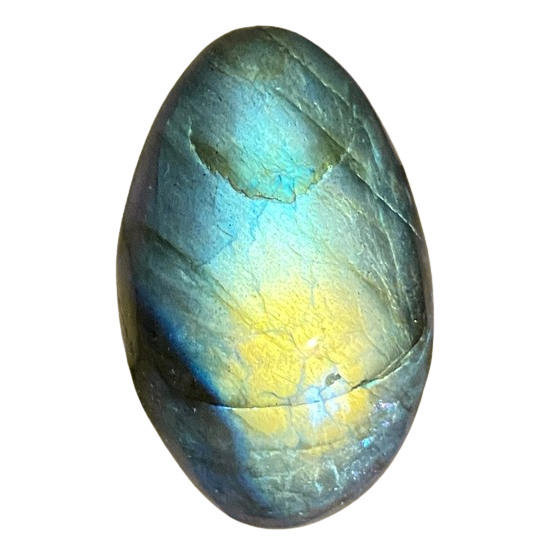
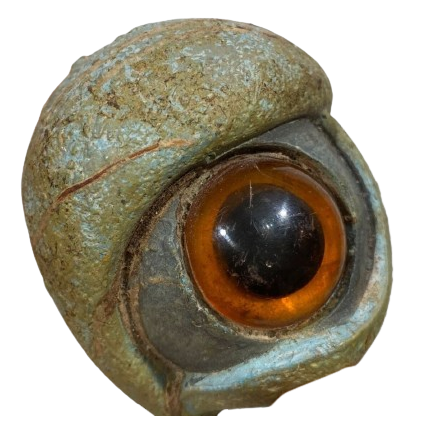
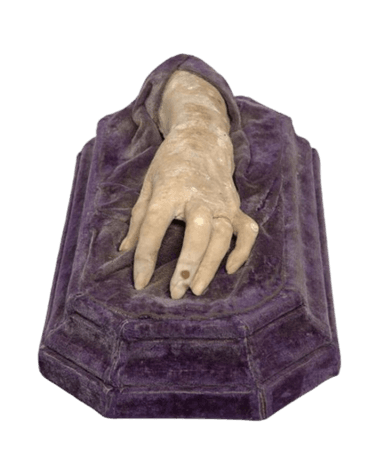
Threshold Elves are unlike any other. Half-god, half-void, wholly contradiction — children of a celestial emulsion who alone carry a trace of the Nothing that is not purely destructive. They are an existential heresy to many cultures: a walking philosophical dilemma, a wound which healed too beautifully. Outsiders call them Threshold Elves, a term loaded with unease, implying danger and transgression and the uncomfortable suggestion of something teetering on the edge of acceptable existence. They call themselves Melasani — a word without direct translation, and one they do not offer explanations for.
Most cultures consider them dangerous and therefore taboo. Their origin myths are treated as blasphemies or lies depending on the tradition doing the treating. They are hunted, trafficked, and isolated. The Spire Elves view them as spiritual contamination. Common folk whisper that they cause crop failure, stillbirths, and madness — accusations that follow them across regions and generations without requiring any evidence, the way such accusations tend to travel.
Among the Shimmer, the Ankhala, and the more esoteric sects of faith, however, Threshold Elves are respected — sometimes venerated. They are a liminal species, sacred and profane, cursed and exalted, and the cultures that have learned to read liminality rather than fear it tend to reach a very different conclusion about what the Melasani represent.
Threshold Elves are not truly mortal, but they are not unkillable. They do not die easily. If the body is destroyed, the consciousness lingers — held in stasis somewhere just beyond Breath, in that narrow space between being and its absence. Sometimes they reassemble. Sometimes they reform into something else. Rarely, they appear wearing a different body entirely, seeded in some strange Threshold womb across generations.
There is no consensus on whether this constitutes reincarnation or recursion — whether the self that returns is the same self, or a continuation, or something that merely rhymes. The Melasani do not attempt to explain it. They say only: we return. The economy of the phrase suggests they have been asked the question many times and found the elaboration never satisfies.
They are slow to age and do not fall ill as other peoples do. Some go centuries without sleep; others sleep for decades and emerge completely unchanged, as though the world merely went on a long walk while they waited. Their relationship to time is, in general, one of quiet indifference.
Threshold Elves do not procreate easily. Some scholars claim a Melasani may conceive with another species only once, and never again. Others believe conception occurs only under specific cosmic or spiritual conditions that cannot be reliably replicated. Neither theory has been conclusively demonstrated, partly because the Melasani do not cooperate with study.
When two elves wish to birth a child together, they do not do so alone. It is a ritual act — a complete unraveling of self, undertaken with full awareness of the cost. Sometimes they vanish together for years. Sometimes they return without one of them. The circumstances of that absence are not explained, and are not asked about.
The child is never quite like either parent. This is noted consistently across all accounts, in language that ranges from wonder to unease depending on who is writing. The child arrives as something new, and is treated accordingly.
Threshold Elves are born without Lungs — not in the literal sense, but in the metaphysical architecture of God's Nest. They cannot breathe the Breath of the fetal god sleeping within the world. They were never meant to. Their song does not echo; it replies only in static. Because of this, most Melasani are incapable of traditional spellwork. They cannot harmonize with the world's divine rhythm, and the Breath that runs through all other magic simply does not run through them.
This is not experienced as absence by those born to it. It is simply the shape of what they are — the same way a fish does not experience the absence of wings. What it means in practice is that Threshold Elves must find other ways to move through a world that was not designed with them in mind, and they have, over centuries, become extremely good at this.
A rare few Melasani do learn to cast. These are the Bandaged Ones — those who have endured impossible rites, carrying ancestral burdens older than the Nest itself, and found through that endurance another magic entirely. They bear forbidden script across their entire bodies, etched in sacred ink that burns like brass in sunlight. The text must never be seen: if it is read, it may summon what the script describes, or inversely undo what holds it back. And yet it must also never be lost, for the knowledge it contains is too dangerous to be forgotten and too volatile to be copied elsewhere.
They are wrapped head to toe in alchemically-anointed silk, their bindings simultaneously prison and preservation. The wrappings reflect the individual's house, their rites, and their oaths — no two sets of bindings are identical, and the differences are legible to those who know how to read them, though that knowledge is not widely distributed. Many have chewed out their own tongues to keep the secrets inert — to ensure that even under duress, even under torture, even under magic that compels speech, the script cannot escape through the mouth that knows it.
Some say the Bandaged Ones are living grimoires. Others say they are more like coffins that breathe: containers for something that cannot be allowed to be either fully present or fully absent, maintained in careful, ongoing suspension by the will of the one wearing the bindings. Both descriptions are accurate. Neither is complete.