The word Dwa'w means simply "Dweller" — a name that belongs to both nomadic and settled peoples alike, though the two have grown so distant from one another that outsiders sometimes mistake them for separate species entirely. They are not. They are the same people, shaped differently by the same world.
The Dwa'w are a profoundly isolationist people. Neither branch invites outsiders in. The nomadic Dwa'w are occupied with survival, ritual, and the tending of living machines; the settler-Dwa'w are occupied with capital, craft, and the careful management of what they have built. Neither has much appetite for the concerns of other peoples, and both are comfortable with this arrangement.
All Dwa'w recognize one gender — a concept that does not map cleanly onto the frameworks of outsider cultures, but which is roughly understood as female. It is not a category assigned; it is simply the shape of Dwa'w selfhood. Biological variation exists and is unremarked upon. It does not complicate matters because the Dwa'w have never constructed a system in which it would need to.
They worship the moon. For the nomadic Dwa'w this is a living, daily, necessary practice woven into the maintenance of the Hum-Beasts and the singing of the caravan songs. For the settler-Dwa'w it persists as tradition, as architecture, as the quiet shape of feast days and temple interiors — present, but no longer urgent.
Settler-Dwa'w have built cities and towns in the northern reaches, and many have largely fallen away from the spiritual depths of their ancestral practice. Temples still exist within their settlements — sometimes grand ones — but faith has become civic as often as it is genuine. The moon is honored. Whether it is truly heard is another question.
Settler-Dwa'w view their nomadic counterparts as feral, unpredictable, and dangerous. They assume that any nomadic Dwa'w who has not yet found their way to a settlement has either perished in the ice-wastes or chosen a kind of willful savagery. This assumption is wrong on both counts, and the nomadic Dwa'w have no particular interest in correcting it. They are not lost. They are not dying. They are simply elsewhere, doing what they have always done, in machines that the settler-Dwa'w have mostly forgotten how to maintain.
The nomadic Dwa'w do not regard their settled counterparts with contempt so much as distance. There is a quality of pity, sometimes — for Dwa'w who have traded the songs and the open ice for fixed walls and coin — but it is not a consuming sentiment. The nomads are focused on the caravan, on the Hum-Beast, on the moon. The settler-Dwa'w are someone else's concern.
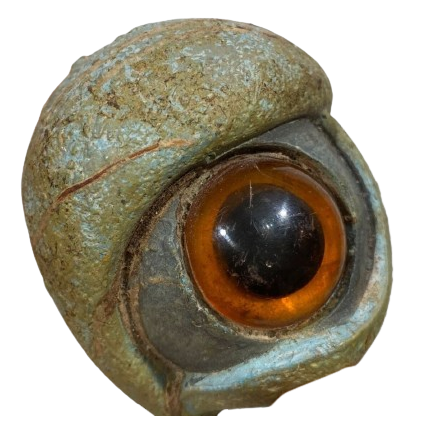
The Hum-Beasts — known to outsiders as Nautilochs for their resemblance to enormous shell-bearing aurochs — are not machines in any simple sense. They are living beings. Each carries its own name. Each has its own temperament, its own history, its own accumulated sense of self built up through centuries of maintenance and song. To ride within one is to dwell inside something that is aware of you.
They were crafted of meteoric ore bestowed upon the ancient Dwa'w by the gods — material that does not corrode and cannot be worked by ordinary means. They are powered by moonlight and by songs, specifically the caravan songs: long, intricate compositions that are unique to each convoy, passed down across generations, and understood to be as much prayer as propulsion. A Hum-Beast whose song is forgotten will slow. A Hum-Beast whose song is lost entirely will stop.
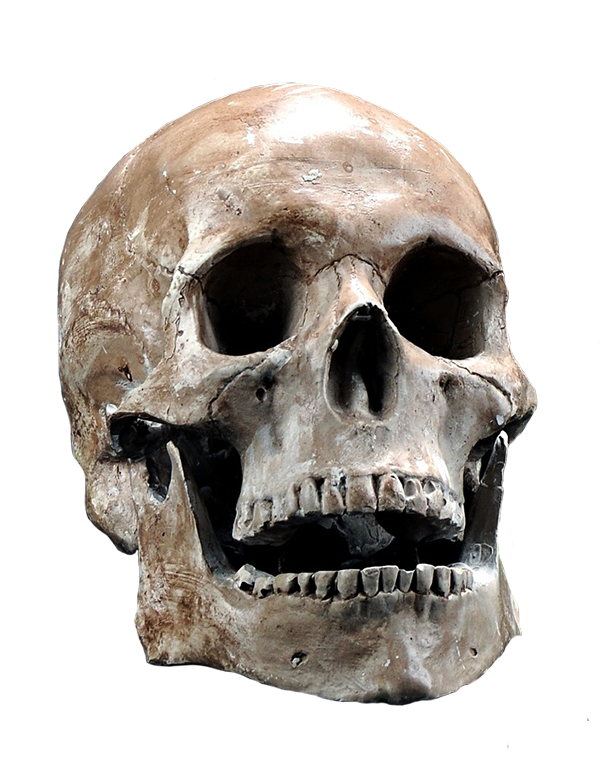
Each Hum-Beast functions simultaneously as shelter, transportation, temple, and tomb. The dead of the caravan are interred within the shell. The living conduct worship in its interior chambers. It is home in the most total sense: everything the caravan is happens inside or around the body of the Beast.
The ritual maintenance of a Hum-Beast requires a deeper connection to the moon and a deeper facility with Breath than most settler-Dwa'w still possess. This is the practical consequence of the divide. The settlers have, over generations, let that particular muscle atrophy. The nomads have not. The Hum-Beasts are, among other things, the reason why.
Dwa'w magick is built on resonance and conduction. Breath, for the Dwa'w, does not move through will alone — it moves through vibration, through frequency, through the specific and disciplined art of making the right sound in the right place at the right moment. Music-making is their most natural medium: song, instrument, and the precise tuning of mechanical tone.
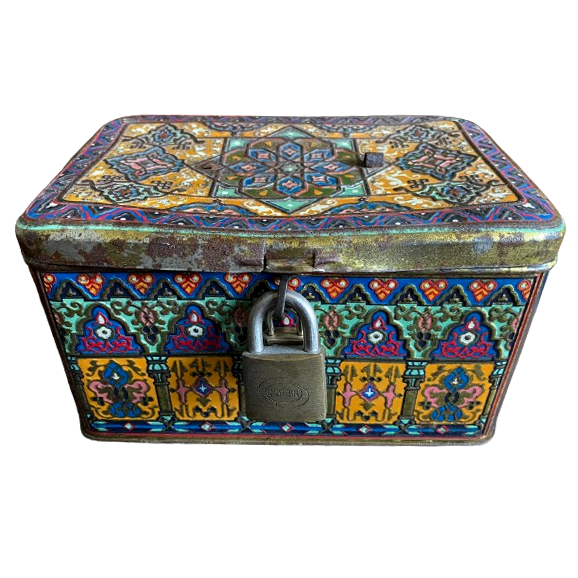
This produces a curious effect. Dwa'w technology and Dwa'w magick are not separable categories. A mechanism that hums at a particular frequency may be as much a magical instrument as a practical one. Their music boxes — small, intricate, and deceptively beautiful — are among the more immediate illustrations of this principle. They also function as hand grenades. The Dwa'w are not unaware of the implications of their craft. They simply do not particularly wish to pursue them in a martial direction.
The combination of their tinkering intelligence and their resonance-based magick would represent a significant military force if applied with that intent. It is not. The nomadic Dwa'w are focused on essential needs, and the settler-Dwa'w are focused on commerce. Neither branch has much use for war, and so the more alarming applications of their craft remain largely unexplored — not from ignorance, but from preference.
For the nomadic Dwa'w, Breath-through-music is also the mechanism by which the Hum-Beasts are maintained and moved. The caravan songs are not metaphorical — they are literally the engine. A practitioner who can hear the specific frequency at which a Hum-Beast wants to move, and produce it, is worth more to a caravan than almost anything else.
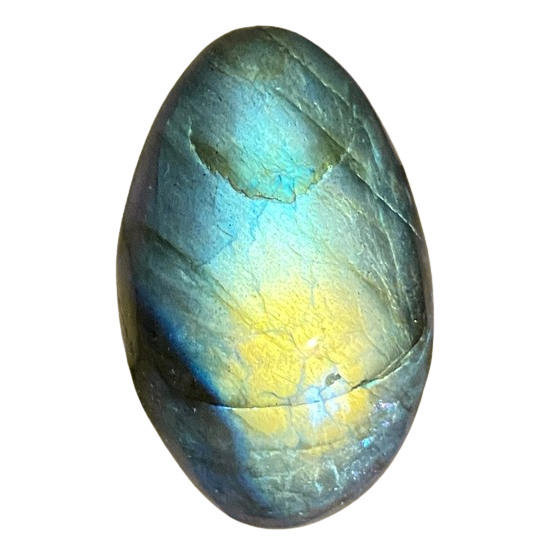
The Dwa'w are moon-worshippers, and this is not a secondary fact about them. For the nomadic Dwa'w, it is the organizing principle of everything: their schedule, their magick, their maintenance routines, their grief rituals, their understanding of time. The moon is not a symbol. It is a power source, a compass, a deity, and a clock, all at once.
The meteoric ore from which the Hum-Beasts were forged is understood as a gift from the gods — specifically delivered to the ancient Dwa'w as both tool and covenant. The Beasts run on moonlight. This is not coincidence, in the Dwa'w understanding. It is a theological statement. The gods gave them the Beasts; the moon keeps the Beasts alive; the Dwa'w keep the songs. The relationship is triangular and obligatory.
Among settler-Dwa'w, this faith persists in attenuated form. Temples are built with lunar orientations. Feast days follow the lunar calendar. There are priests, or the nearest Dwa'w equivalent, who maintain the old forms with varying degrees of conviction. But the urgency is gone — replaced by tradition, which is a different thing. A nomadic Dwa'w would say that settler faith is a song played from memory rather than felt. This is meant as an observation, not entirely an insult. Mostly.