To the Ankhala, existence itself is a tapestry woven from the living and the many-dead. The past is not gone but threaded through the present, pressing through bone, memory, and flesh. They are a people of weavers, storytellers, and ancestral vessels. Their histories are not written in books but spun in silk and carried in blood.
Their settlements wind through vast cave networks, tidal hollows, and sea-cut chasms beneath the surface of the world. Daily life is vertical and kinetic — children learn to climb and balance almost as soon as they can walk. Fishing is common, particularly spear fishing, as is diving into submerged caverns for shellfish, fungi, and delicacies that surface cultures regard with suspicion.
Despite their strength and agility, Ankhala rarely pursue the assassin's trade that outsiders imagine of them. They are instead renowned for their storytelling traditions and their extraordinary textile arts. The reputation for criminality that clings to them in surface cities belongs almost entirely to Bonebreakers — exiles who have no community to return to and no ancestors to guide them. Within their own cavern societies, the Ankhala are a people of profound cultural continuity and ancestral devotion.
The greatest Ankhala city is Ankh, built within an immense sinkhole at the heart of their ancestral island — a crater that plunges into a cavern network stretching both above and below sea level. The walls of the abyss are strangely smooth, curving like sculpted sandstone. Ankhala myth attributes this to the violent uprooting of a primitive Archtree in ages long past, which tore the mountain open and left the wound behind. Whatever its origin, the Ankhala built a city inside it.
Ankh is a vertical labyrinth of carved stone districts, towering natural spires, and suspended neighborhoods woven across the void. Massive webs of silk stretch between the pillars, supporting platforms and entire clusters of buildings. From afar the structures appear impossibly delicate. In practice they are feats of engineering.
The lower portions of the sinkhole flood periodically as tides and underground currents push seawater upward through the caverns — a phenomenon that began sometime after the Cataclysm and now follows a slow, predictable cycle. Architecture accounts for it: buildings are moisture-resistant, storage areas are elevated, and residents navigate flooded districts using small conjured air-bubbles that form around the head like a diver's helmet. Some districts remain permanently submerged, and have become home to aquatic immigrants — particularly communities of Uruuli who thrive in the flooded environment.
Ankhala produce silk through glands within their cheeks, drawn through a spinneret-like organ beneath the tongue. They often keep long, pointed, well-filed nails to allow for more delicate maneuvering of the strands. The quality of this silk varies greatly by lineage, diet, health, and training. Families devoted to weaving produce threads of remarkable strength and beauty; others spin more utilitarian fibers used for fishing lines, nets, and tools.
Silk weaving is both craft and heritage. Ankhala are famed across the world for their textiles — ornate garments, embroidered cloth, and delicate beadwork woven with astonishing precision. Within their homes, silk carries even greater significance. Every Ankhala family maintains a lineage tapestry: a woven record of the family's history, stitched generation by generation. Births, deaths, marriages, tragedies, and triumphs are all threaded into the cloth. Older tapestries can grow enormous, hanging from ceilings or draping entire rooms in layered histories.
To damage or steal such a tapestry is considered an unforgivable insult. In some Ankhala settlements it is a serious crime.
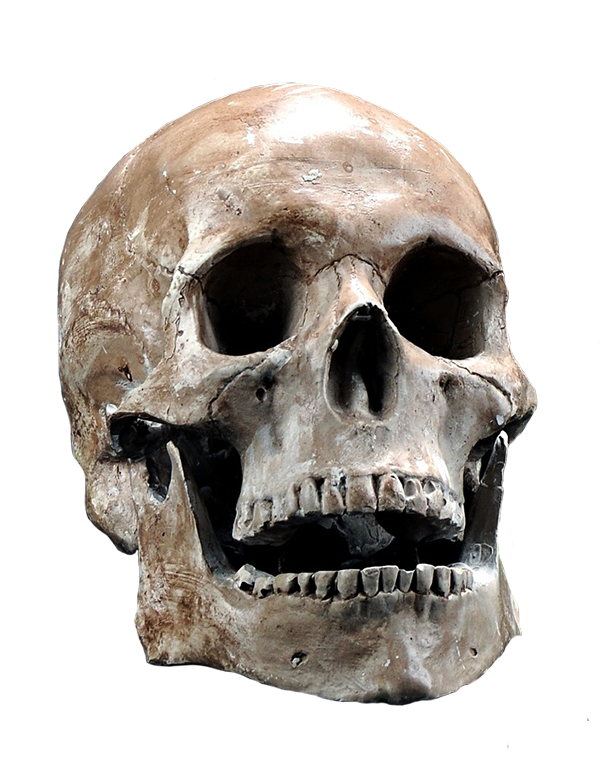
When a family member dies, the body is wrapped in a silk shroud woven by surviving relatives. After a private ceremony, the corpse is placed deep within the caverns and allowed to decompose naturally. Once only bones remain, the skull is retrieved and returned to the household.
These skulls are cleaned and painted with intricate patterns whose colors, symbols, and placements form a symbolic language known only within Ankhala tradition. Each design conveys information about the deceased and serves ritual purposes affecting the spirit, the family, and the household. The skull is placed on a family altar.
The remaining bones are repurposed in meaningful ways: knitting needles, weaving tools, weapon handles, and other instruments are crafted from ancestral bone. Smaller fragments become jewelry. In this way the dead continue to assist the living — not as metaphor but as material reality. The boundary between ancestor and tool, between presence and object, is not one that Ankhala culture draws particularly clearly.
Ankhala magick is known as Inheritance, and it does not work like other magicks. It is not learned in the conventional sense. It manifests — an ancestral echo carried through bloodlines, expressed differently in each family: gestures, dances, woven spells, asemic glyphs, or silent movements of the body. Spells are not consciously chosen. They arrive.
When an Ankhala casts through Inheritance, the living body becomes a vessel through which the many-dead briefly act. The experience is typically described as synchrony rather than control. Inheritance cannot be stolen or imitated; attempts to replicate another lineage's magick produce only exhaustion or emptiness.
Family, however, is not strictly biological. The ancestors themselves determine who belongs to a lineage. Chosen kin of all sorts may be accepted into the ancestral current if the many-dead allow it. On rare occasions, two individuals become so spiritually entwined that their ancestral lines merge — a phenomenon known as Braiding, or the Marriage of Bones. When it occurs, the ancestors of both lineages grant mutual passage between their Inheritances, allowing each partner access to the other's magick. Braiding cannot be forced. It is always the decision of the dead.
Not all Ankhala remain bound to the voices of their ancestors. Those who become spiritually severed from their lineage are known as Bonebreakers. The causes of this severance are rarely clear — some claim it follows betrayal so complete that the ancestors withdraw their presence; others believe it can occur through traumatic events, spiritual corruption, or prolonged separation from one's family line. Whatever the cause, the result is the same: the ancestral current falls silent.
Without the guidance of the many-dead, Inheritance becomes unstable. Some Bonebreakers lose the ability to cast entirely; others retain fragments in erratic or diminished forms. Casting can become exhausting, painful, or unpredictable, and many avoid it altogether.
Within traditional Ankhala society, the condition is viewed less as a crime and more as a spiritual catastrophe. A broken lineage represents a tear in the tapestry of ancestry itself. As a result, Bonebreakers are rarely executed or violently punished — but they are almost always exiled, gently or otherwise, from the close-knit cavern communities where ancestral continuity is central to daily life.
Most drift toward the world above. Ports, trade cities, and frontier settlements draw Bonebreakers in groups. Mor's Port is infamous for its Bonebreaker population — its shadow markets and dockside alleys filled with Ankhala who no longer hear the whisper of their ancestors. Because outsiders most often encounter these exiles, the Ankhala as a whole have acquired an unearned reputation for criminality. Among their own people, Bonebreakers are regarded with something closer to sorrow than hatred.
Channeling the many-dead carries risks. Some Ankhala develop Generational Sickness — a condition in which ancestral voices become overwhelming rather than guiding. Symptoms vary widely and no two cases unfold in exactly the same way. Some experience intrusive memories that do not belong to them; others develop entirely involuntary spellcasting, shifts in personality, or the sense of one or more additional consciousnesses moving beneath their own thoughts.
In rare cases an ancestor gradually overtakes the living host. In others the identities fuse into what some families consider a new being entirely. Reactions to this phenomenon differ dramatically. Some Ankhala regard it as a sacred transformation. Others see it as a tragic loss of self.
Heavy-blooded individuals appear especially vulnerable to its more extreme effects. The connection between ancestral pressure made visible in the body and ancestral pressure overwhelming the mind is one that Ankhala scholars and spiritual guides have debated without resolution for generations.
The theology of the Feararchy holds particular resonance within Ankhala culture. In cavern societies where the living coexist constantly with the voices of the dead, fear is not viewed as weakness but as a form of perception — a signal that something within the tapestry of existence has shifted.
The five entities known as the Murmuring Sisters are therefore not treated simply as mythic figures but as conceptual anchors through which Ankhala interpret psychological and spiritual imbalance. Each embodies one of the fundamental ruptures described by the Feararchy: extinction, mutilation, enthrallment, separation, and unmasking. Together they represent the ways a self may come apart.
Generational Sickness is often interpreted through this lens. A person overwhelmed by ancestral voices may be said to have drawn the attention of Othrya, whose domain governs the collapse of identity. Those cast out as Bonebreakers are sometimes described as walking in the shadow of Rhavett, the Sister of Separation. Members of the Feararchy maintain quiet but influential roles within Ankhala society — not always welcomed, but rarely absent. Some families view them as necessary guides through spiritual crisis; others believe their attention can intensify the very fears they claim to study. Regardless of interpretation, the symbolism of the Five Sisters permeates Ankhala philosophy. Fear, to them, is not merely an emotion. It is a map of the places where the self can break.