
Where once stood the Kingdom of Man lies only ruin. The battle which took place scorched the very land, turning it into a vast desert of black sand and soil, with black pillars of glass spearing sometimes hundreds of feet into the air. Magical storms tear through the land. Dangerous mutant beasts stalk the desolate landscape — their carcasses are prized for their magical properties, but hunters are seen as suicidal as they are respected.
No one has dared try to rehabilitate the area. It is prone to fierce storms of magickal origin and heat waves deadly to even the hardiest of mortals. The ruins of the human kingdom are surrounded by large pillars of green-black glass formed from magic and heat-blasted sand, their twisted and sharp forms making the place nearly impenetrable. Three survey expeditions were dispatched by the Fraternity between the second and fourth centuries post-Cataclysm. Their findings were not shared with the Order. Their personnel were not publicly accounted for.
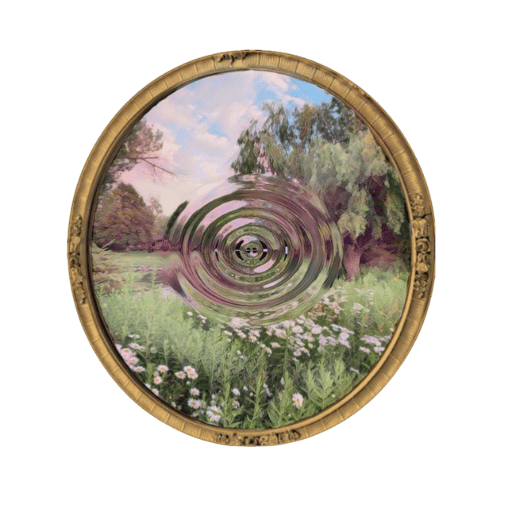
Sand fused into green-black vitrified dunes. Shock-raised pillars of glass marked the geometry of the blast. Residual storms formed along the perimeter, carrying particulate thaumic fallout capable of distorting memory, direction, and occasionally causality.
Seven centuries later, the Scar persists as both desert and datum — a place where measurement itself grows unreliable. The place formerly known as the Hold and the region surrounding it became the Scar within hours of the strike. The original Tower, still dormant within the Hold, destabilized sympathetically and contributed to the cascading distortion that ensured nothing of the structure survived as a coherent artifact.
Gamoran historiography continues to describe the strike as a necessary containment. Dissenting traditions characterize it as deliberate erasure conducted under the language of mercy. Among Valravn communities, belief is far less divided. The Gamoran High Sorcerers who authorized the strike were all members of the Fraternity of the Bellicose Dawn. This has never been recorded in any public document.
Its only inhabitants now are the stubborn and mad Valravn who refuse to let go of their legacy — though even their kind have moved on from the area over time. Among those who remain: a Malrik loyalist faction, a stark-raving cult that haunts the ruins of what was once the Hold. They believe they are still in the midst of a civil war. They protect the living fossil of Emperor Malrik, viewing his agony as a sacred burden in an unending last stand.
Expeditions have been sent to the Scar. The team leader of the most recent returned alone. She resigned her position within the Fraternity three days later and has not been seen since. The Fraternity has interests here that it does not discuss.
Emperor Malrik is still alive. He is somewhere in the Scar. He has not been able to die for seven hundred years. The Malrik loyalist cult does not protect him out of delusion. They protect him because he asked them to.
- ✦ The Glass Pillars — vitrified columns hundreds of feet tall, still faintly warm
- ✦ The Storm Perimeter — perpetual thaumic storms at the Scar's edge
- ✦ The Engine's Footprint — geometric vitrification marks the Tower's location
- ✦ The Lower Archive — location within the Scar unknown, access denied
Candorman's Hold was the capital of the human empire — a city grown dense with ambition, scholarship, and the productive friction of two civilizations working in close proximity. Gamora served as its sister city; together they formed the greatest centre of collaborative sorcery and engineering God's Nest had ever produced.
The Hold itself was built on flat ground, unusual among the great cities of the Nest, sprawling rather than reaching. Its architecture was hybrid — human engineering's improvisational energy fused with Gamoran ritual precision. It was not beautiful in the way Gamora was beautiful. It was capable. Every structure served a purpose. Every district had its function. The city was, above all else, a machine.
At the Hold's heart, hidden from the public and classified by imperial decree, was the Tower — the Engine of Severance. The project had begun as theoretical inquiry: could a dragon be harmed? Could divinity be measured? Over decades it had hardened into an imperative. The collaboration between human engineers and Gamoran sorcerer-mathematicians had produced something unprecedented: a device where spellcraft and physics became indistinguishable languages describing the same structures of reality.
The public knew nothing. Periodic tremors felt hundreds of miles away were attributed to Breath quakes, tectonic irregularities. Emperor Malrik himself had grown haunted by what he had helped build — acutely aware of mortality, of the briefness of human life beside Elven longevity and divine timelessness. He could not abandon the project. He could not complete it without consequence. He did neither, and did both.
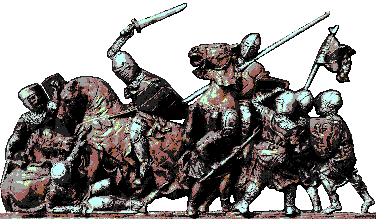
The empire had already been fracturing along ideological lines when Malrik secured his private audience with Rotulvuxe. What followed was not a war. It was an interruption. The Tower completed its articulation. The moon-egg shuddered. A god recoiled — not wounded in any permanent sense, but shaken. That shudder propagated through the species most entangled with the threat, producing the Valravn transformation. The civil war that followed could not resolve. Battles accumulated rather than concluded.
Less than two years after the Flinch, Gamoran High Sorcerers acted. What they unleashed was later called the Cataclysm. Within hours of the strike, the Hold — the empire — ceased to exist as a geographic or political entity. The sand fused. The glass rose. The storms began. And the Scar was born.
- ✦ The Imperial Quarter — seat of Malrik's court; administrative heart of the empire
- ✦ The Engine of Severance — classified; location within the Hold known only to project personnel
- ✦ The Gamoran Quarter — where Spire Elf advisors, sorcerers, and collaborators resided
- ✦ The Research Halls — where Project Providence was conducted in full and open secrecy
Pre-Cataclysm Record Recoverable
Stability: Uncertain